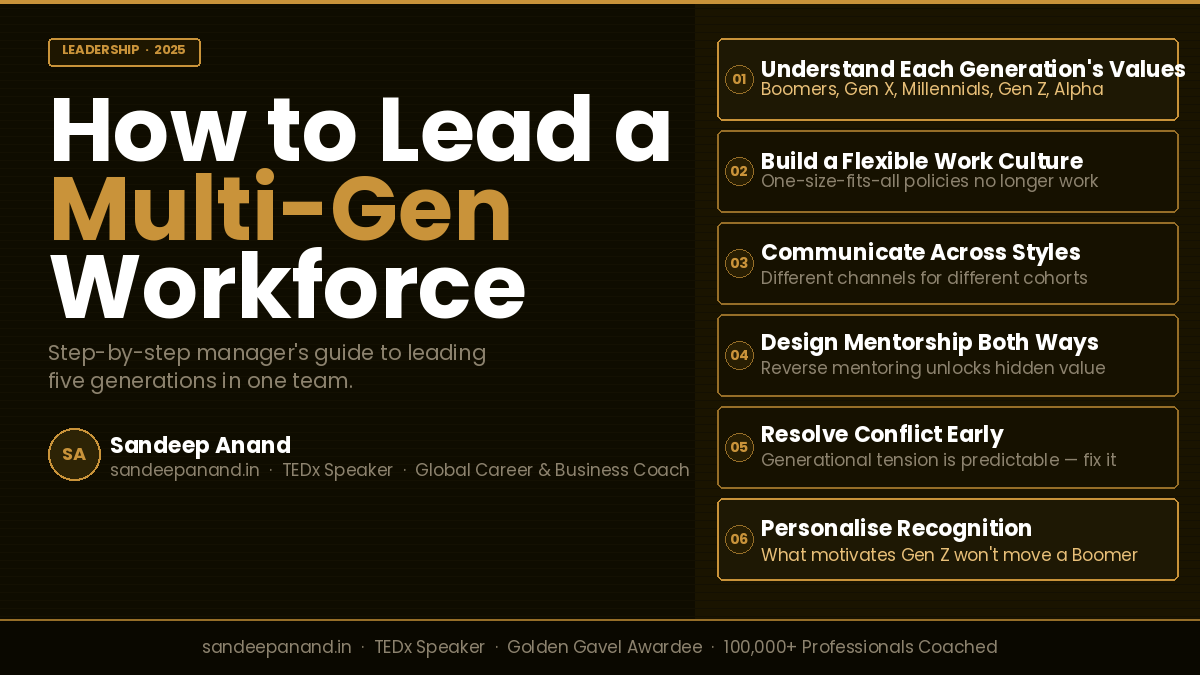

For the first time in history, five generations simultaneously coexist in the multi generational workforce, creating unprecedented leadership challenges for today’s managers.
Currently, about 35% of employees report to managers who are younger than them, while workplace teams routinely span four decades of age differences. This diversity brings valuable perspectives but also significant complications. Each generation carries unique values, communication styles, and work expectations shaped by the distinct cultural and historical events they experienced.
However, managers who successfully bridge these generational gaps gain powerful competitive advantages. Research shows diverse teams with effective leadership outperform homogeneous groups by 35% in profitability. Specifically, organizations with strong multi-generational collaboration report 18% higher revenue and 15% better decision-making.
This comprehensive guide provides practical, step-by-step strategies to help you transform generational differences from potential friction points into powerful assets. From understanding each generation’s core motivations to implementing inclusive policies that resonate across age groups, you’ll discover actionable approaches to unite your diverse team around shared goals.
Whether you’re managing Baby Boomers alongside Gen Z or navigating the different needs of Gen X and Millennials, these evidence-based techniques will help you build a cohesive, high-performing team that leverages the strengths of every generation.
Understand the Generations in Your Workforce
Today’s workplace features an unprecedented age diversity spanning five distinct generations. Understanding who these generations are, what drives them, and why these differences matter forms the foundation of effective leadership across age groups.
Silent Generation to Gen Z: Who’s Who
The current workforce comprises five generations, each shaped by unique historical and cultural experiences:
Silent Generation (1928-1945): Though largely retired, some remain active in advisory or part-time roles. They experienced the Great Depression and World War II, which instilled strong values of duty, discipline, and respect for authority [1].
Baby Boomers (1946-1964): Making up approximately 18.6% of the workforce [2], Boomers are known for their strong work ethic, ambition, and career-centered mindset. They often view long hours as a sign of dedication and expect hard work to lead to upward mobility [3].
Generation X (1965-1980): Representing about 34.8% of workers [2], Gen X values independence, self-reliance, and work-life balance. Often called the “latchkey kids,” they grew up during a time when more women entered the workforce, fostering their independence [1].
Millennials (1981-1996): Currently the largest workforce segment at 38.6% [2], Millennials grew up during tough economic times and the rise of the internet. They are comfortable with digital communication yet value direct feedback and mentorship [1].
Generation Z (1997-2012): The newest workplace entrants at 6.1% [2], Gen Z are true digital natives who grew up with smartphones from day one. They bring broader experience engaging with diverse people through technology [1].
Key values and motivations by generation
Each generation’s formative experiences shape distinct workplace motivations:
Silent Generation: Values face-to-face communication, knowledge sharing, and structured feedback. They respect hierarchies and prefer formal work environments [1].
Baby Boomers: Motivated by monetary rewards, promotions, and recognition. They don’t require constant feedback, operating with an “all is well unless you say something” mindset [4]. They typically prefer in-person communication and value loyalty [5].
Generation X: Motivated by independence, flexibility, and work-life balance. They value autonomy, honest feedback, and growth opportunities [6]. They prefer direct, efficient communication and results over processes [3].
Millennials: Driven by purpose, feedback, and meaningful work. They seek career development, flexibility, and social responsibility [7]. About 75% of the global workforce will consist of Millennials by 2025 [6].
Generation Z: Motivated by clear goals, flexibility, and diversity. They expect instant feedback, inclusivity, and authenticity [6]. Approximately 67% want to work at companies where they can advance their careers [6].
Why generational context matters for leadership
Understanding generational differences provides crucial insights for effective leadership:
First, it enhances collaboration and reduces conflict. When managers recognize different communication preferences—from Baby Boomers’ face-to-face preference to Gen Z’s digital-first approach—misunderstandings decrease and knowledge-sharing increases [7].
Moreover, tailoring leadership approaches to generational needs significantly impacts performance. Research shows companies that adapt leadership styles to generational preferences improve both employee well-being and business results [7].
Additionally, generational awareness helps resolve workplace conflicts. When leaders understand that younger employees (Millennials and Gen Z) generally prefer supportive, flexible leadership styles, whereas older generations favor more structured approaches, they can bridge communication gaps more effectively [7].
Consequently, focusing on what people can contribute rather than their age creates better marketing plans, stronger customer connections, and fresh approaches to solving problems [1]. This becomes increasingly important as Generation Alpha (born 2013-2025) prepares to enter the workforce in the early 2030s [1].
Adapt Your Leadership Style to Each Generation
Effective leadership in a multi generational workforce requires adapting your approach to match each age group’s unique preferences and values. One-size-fits-all management fails when team members span decades of different life experiences and work expectations.
Directive leadership for Traditionalists
The Silent Generation (born 1928-1945) responds best to a directive leadership approach built on clear hierarchy and structure. These employees value authority, consistency, and well-defined expectations. When leading Traditionalists:
- Establish specific values, behavioral patterns, and clear instructions [8]
- Communicate formally through structured, in-person meetings [9]
- Provide predictable, consistent performance expectations [8]
- Recognize their experience with formal acknowledgment [9]
This directive style creates stability for Traditionalists who appreciate knowing exactly what tasks to complete and how. As one leadership expert notes, “Activities associated with directive behavior include guiding and structuring followers’ activities, planning, scheduling, and assigning responsibilities” [8]. Notably, this approach works best for those who experienced post-war economic growth and value job security [9].
Collaborative leadership for Boomers
Baby Boomers (1946-1964) benefit from a leadership style that blends hierarchy with collaboration. Unlike Traditionalists, Boomers expect input opportunities despite preferring defined organizational structures.
When leading Boomers, focus on:
- Maintaining some hierarchical elements while encouraging teamwork [10]
- Emphasizing hard work, loyalty, and achievement as core values [4]
- Recognizing the importance of business relationships [4]
- Providing clear direction while allowing collaborative decision-making [5]
Although Boomers remain comfortable with traditional leadership structures, they typically value involvement in organizational processes. Furthermore, they appreciate leaders who acknowledge their experience and dedication—only 14% of Gen X employees have considered leaving their jobs compared to higher percentages for younger generations [6].
Flexible and honest leadership for Gen X
Generation X (1965-1980) thrives under leadership that prioritizes independence, results, and work-life balance. Currently holding over half of leadership positions across industries [6], Gen X values straightforward communication and autonomy.
For effectively leading Gen X:
- Offer flexibility and respect for personal boundaries [6]
- Provide direct, honest feedback without micromanagement [11]
- Focus on outcomes rather than processes [11]
- Recognize their entrepreneurial spirit and problem-solving abilities [12]
In essence, Gen X leaders “favor transparency, direct communication, and mentoring over micromanagement” [11]. This generation has experienced significant technological shifts throughout their careers, making them uniquely positioned to bridge traditional and modern leadership approaches [6].
Feedback-driven leadership for Millennials and Gen Z
Younger generations—Millennials (1981-1996) and Generation Z (1997-2012)—expect leaders who prioritize frequent feedback, purpose, and personal development. These digitally-native employees value transparent communication and meaningful work.
When leading Millennials and Gen Z:
- Provide regular, constructive feedback rather than annual reviews [7]
- Create opportunities for growth and development (a top reason they choose employers) [13]
- Focus on meaningful work that contributes to their sense of purpose—important to approximately 90% [13]
- Embrace technology while developing personal connections [7]
Indeed, both generations “expect their leaders to adopt an employee-centric culture that puts them before profits” [7]. Their feedback expectations differ from older generations—they see feedback as a two-way street and expect organizations to listen to their input [7]. For Gen Z specifically, only 6% say their primary career goal is reaching a leadership position, focusing instead on work-life balance [13].
Adapting leadership styles accordingly creates an environment where all generations contribute their best work while feeling valued for their unique perspectives and strengths.
Bridge Communication Gaps Across Age Groups
Communication breakdowns often stem from generational differences in today’s workplace. Creating connections across age groups requires understanding preferences, establishing shared practices, and selecting appropriate tools for your multi generational workforce.
Recognize different communication preferences
Each generation has developed unique communication styles based on the technologies and social norms they experienced during formative years. Baby Boomers typically prefer face-to-face meetings or formal emails, valuing personal connections that convey sincerity and commitment [1]. In contrast, Generation X favors direct, efficient communication focused on practical outcomes [4].
Millennials embrace collaborative digital platforms and expect frequent feedback exchanges, while Generation Z gravitates toward visual elements, bite-sized information, and immediate responses [4]. Research confirms older workers generally prefer structured email updates, whereas younger employees favor quick messaging platforms [10].
These differences can create significant barriers—when team members choose different platforms, the result can be missed connections, false assumptions, and decreased productivity [14].
Set team-wide communication norms
Establishing clear guidelines helps ensure everyone understands expectations regardless of generational background. Start by asking each team member about their preferred communication style and explaining your own [14]. Subsequently, document these preferences in your team’s shared workspace [15].
Most organizations benefit from creating explicit communication norms—the shared expectations for how team members interact with each other [15]. These should address:
- Which platforms to use for different types of communication
- Expected response times across various channels
- Guidelines for meeting formats and participation
- Protocols for urgent versus non-urgent matters
Teams that establish these norms report reduced stress, improved productivity, and more meaningful work, as 65% of knowledge workers say they prioritize message responses over making progress on important tasks [15].
Use tools that support all styles
Effective multigenerational teams employ multiple communication channels that accommodate different preferences. Your organization might use instant messaging for quick updates, email for formal communication, and schedule face-to-face meetings for important discussions [14].
The key is providing transparency through procedures that align with varied communication preferences, even if it means repeating information across platforms [14]. Training also plays a crucial role—particularly since some staff members are tech-savvy while others need help with basics [1].
For maximum effectiveness, offer flexibility in learning methods. Present information through multiple formats such as face-to-face sessions, online classes, and self-directed learning, as no single training approach works for everyone [1].
Foster Mentorship and Knowledge Sharing
Mentorship bridges the knowledge gap in a multi generational workforce, creating value that extends beyond traditional top-down learning. When organizations establish effective knowledge-sharing pathways, they harness the collective wisdom of all age groups while breaking down stereotypes that often separate generations.
Reverse mentoring: learning goes both ways
Reverse mentoring flips the traditional mentorship model by acknowledging younger employees’ expertise. Unlike conventional approaches where senior staff guide junior colleagues, this innovative format encourages two-way knowledge exchange. Companies implementing reverse mentoring programs experience 23% increased overall performance and productivity compared to those without such initiatives [8].
In this arrangement, younger employees often share technical expertise while gaining:
- Strategic thinking and organizational insights
- Leadership experience through guiding senior colleagues
- Improved communication skills and confidence
- Increased visibility with executive leadership
Meanwhile, senior participants receive fresh perspectives on emerging technologies and social trends. According to research, organizations with mentoring programs report higher levels of employee engagement, job satisfaction, and retention rates [8]. First, establish clear objectives for what each participant should contribute and gain from the relationship.
Create structured mentorship programs
Effective mentorship requires intentional design rather than casual arrangements. To establish successful programs, define goals aligned with both individual and organizational objectives [16]. A study by Gartner found employees participating in mentorship programs are five times more likely to be promoted than those who don’t [8].
For maximum effectiveness, focus on proper pair selection based on complementary skills and personalities rather than arbitrary matching. In fact, 75% of executives believe mentoring played a key role in their personal career success [8]. Second, create frameworks that support regular interaction through scheduled meetings, guided discussion topics, and accountability measures.
Encourage cross-generational collaboration
Beyond formal mentorship, organizations benefit from creating structured opportunities for generations to work together. Cross-functional teams spanning departments and age groups foster both technical collaboration and social learning [17]. Through regular interaction, team members build trust that transcends age-related stereotypes.
Project-based learning proves especially effective, as these temporary ecosystems enable emerging talent to gain exposure to legacy expertise while tenured employees observe and adopt emerging practices [17]. Third, recognize successful collaborations publicly to reinforce the value of intergenerational knowledge exchange.
Organizations implementing these approaches not only retain critical institutional knowledge but also create more inclusive environments where employees of all ages feel valued for their unique contributions.
Build an Inclusive and Flexible Work Culture
A truly inclusive workplace for a multi generational workforce demands systemic approaches addressing both policies and cultural elements. Organizations that successfully navigate this challenge create environments where employees of all ages contribute their best work.
Offer flexible work arrangements
Flexibility serves as a cornerstone for accommodating diverse generational needs. Research shows flexible options like remote work appeal to millennials craving work-life balance and boomers easing toward retirement. Compressed workweeks—scheduling full-time hours over fewer days—allow employees to enjoy longer weekends without impacting productivity. Flexible scheduling enables staff to work during their most productive hours while managing personal commitments.
Address age bias and stereotypes
Ageism remains a significant barrier to workforce inclusion. Firstly, include age in diversity, equity and inclusion policies to ensure measurement and accountability. Organizations should provide training on implicit bias, helping managers recognize and mitigate age-related assumptions. Additionally, use age-friendly language and images in recruitment materials to avoid discouraging older applicants. Skill-based assessments effectively counter misconceptions about older workers’ capabilities.
Design benefits that appeal to all generations
The traditional one-size-fits-all benefits approach fails today’s diverse workforce. Only 59% of employees believe their current benefits package meets their needs [18]. Smart personalization allows employees to select benefits matching their life stage:
- Gen Z needs targeted mental health support as they report higher stress levels
- Millennials and Gen X often require family-oriented benefits as 78% and 74% identify as caregivers [18]
- Boomers value retirement and health benefits with 83% enrolled in health savings accounts
Promote psychological safety for all
Psychological safety—feeling secure to speak up without fear of punishment—serves as a cardinal pillar for engagement across generations. Creating psychological safety involves encouraging dialog through cross-generational mentoring programs. Organizations should tailor leadership practices and communication approaches to foster trust and openness [19]. This environment allows employees to take calculated risks, normalizing mistakes as learning opportunities.
Conclusion
Leading a multi-generational workforce presents unique challenges, yet offers tremendous opportunities for organizations willing to adapt. Throughout this guide, we’ve explored the distinctive characteristics of each generation, from the duty-driven Silent Generation to the digitally-native Gen Z. Understanding these differences serves as the foundation for effective leadership across age groups.
Adapting your leadership approach accordingly creates environments where all team members thrive. Baby Boomers respond to collaborative leadership with clear hierarchies, while Gen X values flexibility and autonomy. Millennials and Gen Z expect frequent feedback and meaningful work. This tailored approach boosts engagement and productivity across your entire team.
Communication stands as another critical factor in bridging generational gaps. Teams that establish clear norms and utilize varied communication channels experience fewer misunderstandings and greater cohesion. Additionally, structured mentorship programs—both traditional and reverse—facilitate valuable knowledge transfer that benefits employees of all ages.
Successful organizations ultimately build inclusive cultures with flexible policies that accommodate diverse generational needs. They address age bias directly, design benefits packages appealing to different life stages, and promote psychological safety for all team members.
The competitive advantages of effectively managing a multi-generational workforce cannot be overstated. Companies that master these strategies report higher revenue, better decision-making, and stronger employee retention. Most importantly, they create workplaces where every generation feels valued for their unique contributions while working together toward shared goals.
Your ability to transform generational differences from potential friction points into organizational strengths will define your success as a leader in today’s diverse workplace. Start implementing these strategies now, and watch your multi-generational team achieve remarkable results together.
References
[1] – https://www.paychex.com/articles/human-resources/how-to-manage-multiple-generations-in-the-workplace
[2] – https://www.shrm.org/enterprise-solutions/insights/guide-to-leading-multi-generational-workforce
[3] – https://cpshr.us/blog-article/managing-generational-differences-in-the-workplace/
[4] – https://www.moxieinstitute.com/how-to-communicate-effectively-generational-gap/
[5] – https://www.linkedin.com/pulse/leadership-style-baby-boomer-generation-brian-tait-pcc
[6] – https://www.forbes.com/sites/carolinecastrillon/2025/04/18/7-critical-ways-gen-x-strengthens-your-leadership-pipeline/
[7] – https://www.zoho.com/people/hrknowledgehive/Understanding-Millennials-and-Generation-Z-in-the-workplace.html
[8] – https://vorecol.com/blogs/blog-strategies-for-mentoring-and-developing-intergenerational-talent-9993
[9] – https://dilanconsulting.com/managing-baby-boomers-in-the-workplace-through-a-dei-lens/
[10] – https://www.loebleadership.com/insights/bridging-gap-leading-multigenerational-teams
[11] – https://allwork.space/2024/10/6-ways-gen-x-leaders-are-shaping-the-future-of-work/
[12] – https://positiveleader.com/blog/generation-x-leadership-style/
[13] – https://www.deloitte.com/global/en/issues/work/genz-millennial-survey.html
[14] – https://thediversitymovement.com/bridge-communication-gap-6-tips-multigenerational-teams/
[15] – https://www.atlassian.com/team-playbook/plays/team-communication-norms
[16] – https://www.oecd.org/content/dam/oecd/en/topics/policy-issues/aging-and-employment/Facilitating-knowledge-transfer-between-generations.pdf
[17] – https://www.forbes.com/councils/forbeshumanresourcescouncil/2025/08/04/the-value-of-generational-knowledge-sharing-in-the-workforce/
[18] – https://www.mercer.com/insights/total-rewards/employee-wellbeing/smart-personalization-providing-employee-benefits-for-every-generation/
[19] – https://citycv.com/psychological-safety/