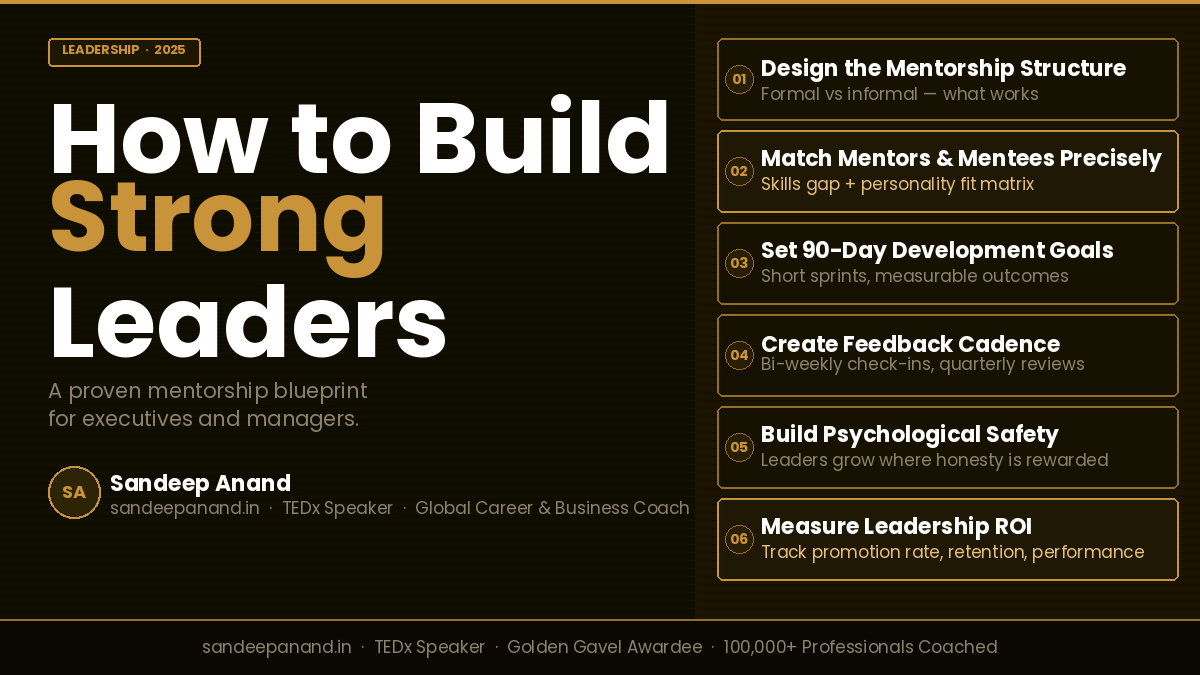

A staggering 98% of Fortune 500 companies run mentorship programs to develop their leaders. This isn’t just by chance.
The value of mentorship stands out clearly in today’s tough business world. Statistics show that mentees receive promotions five times more frequently than their peers without mentors. Leaders who get strong mentoring support are 50% more likely to exceed performance expectations. They also show an 80% higher likelihood of surpassing profit targets.
These numbers tell an impressive story, yet leadership burnout keeps climbing. Recent data shows 56% of executives feel burned out – a jump from 52% last year. The situation looks more troubling as 43% of executives have lost over half their leadership team in just one year.
Executive mentoring proves essential for leadership growth. Companies that run effective mentorship programs see 41-47% better employee retention. The process builds a reliable pipeline of capable leaders ready to step into crucial roles.
This piece will give you a tested mentorship blueprint that builds strong leaders and tackles these challenges directly. You’ll learn how to revolutionize your leadership development strategy through structured mentoring.
Understanding Executive Mentoring
Executive mentoring is the life-blood of leadership development. Many people misunderstand it or mix it up with other ways to grow professionally. Strong leadership through mentorship starts with a clear understanding of what executive mentoring really means and how it works.
Mentoring vs Coaching: Key Differences
People often use these terms interchangeably, but executive mentoring and coaching are different approaches to leadership development. These differences shape how organizations should build their leadership programs.
Executive mentoring builds a long-term growth relationship with an experienced professional who shares wisdom and guidance. Career direction, networking, and personal experiences take center stage in this relationship. Mentoring usually stays informal and experience-based, with less structure than coaching.
Executive coaching takes a different path. It provides a well-laid-out, individual-specific development process that strengthens decision-making, motivates teams, and enhances organizational results. Coaching delivers measurable outcomes linked to business goals and tackles specific leadership challenges.
These relationships serve different purposes. Executive coaching usually runs short-term and targets specific skills or challenges. Mentoring covers more ground, flows more freely, and follows a more open path. An expert explains it best: “If we think of executive coaching as sharpening your skills and expanding them, executive mentoring is focused on imparting wisdom in how to deploy and utilize your skills.”
Their methods show clear differences too. Mentors invest deeply in understanding their mentees’ situations, feelings, and experiences through personal connections. Coaches often step back and let employees develop ideas on their own during growth.
Why long-term relationships matter in leadership development
Leaders moving up to executive positions must develop wider perspectives and handle uncertainties in policy-making, strategy, and responsibility. This shift requires deep personal growth that takes time.
Long-term mentoring relationships give vital support during this progress. Studies show mentors who come prepared, confident, and self-aware create better bonds with their protégés. These lasting connections make learning and personal growth easier.
Numbers tell a compelling story. The Conference Board reports 40 percent of external executive hires fail in their first 18 months. This startling fact shows why growing executives within the company through steady mentorship relationships brings so much value.
Most mentoring relationships last nine to ten months, sometimes stretching to two or three years. Many people keep meeting their mentors occasionally for years. This suggests these connections hold lasting value.
Benefits reach beyond personal growth. Companies with strong mentoring programs see higher employee retention rates. Better retention saves money on turnover and keeps leadership stable. These long-term mentoring relationships also help pass on company knowledge and encourage an inclusive, supportive workplace.
Organizations create real leadership transformation through well-planned, lasting mentorships. This sets the foundation for quick performance gains and steady company growth.
Strategic Value of Leadership Mentoring

Image Source: iSmartRecruit
“The function of leadership is to produce more leaders, not more followers.” — Ralph Nader, Political activist, author, and attorney
Leadership mentoring programs bring real business value that goes beyond helping individuals grow. The numbers tell a compelling story – companies that put money into well-laid-out mentoring see returns in many areas of their business.
Boosting retention and engagement
Companies lose millions each year from employee turnover, but mentorship programs change this dynamic completely. Research reveals that employees who take part in mentoring programs stay with their companies 49% more often. This saves about $3,000 per mentee yearly.
Software-powered mentoring programs make a huge difference in keeping talent. Companies see their turnover rates drop by half among participants. Mentored employees show just a 9% turnover rate while those without mentors hit 19%.
Mentorship does more than keep people around – it gets them excited about work:
- 90% of people with mentors say they’re happier in their jobs
- Having a mentor doubles the chances of being engaged at work
- 4 out of 10 workers without mentors think about quitting within three months
Mentorship builds a strong base for job satisfaction and company loyalty. This becomes vital during tough economic times when 49% of workers say their mental health takes a hit.
Lining up personal growth with business goals
The best mentoring programs connect personal development to what the company wants to achieve. This connection means mentoring isn’t just a standalone program but a key part of business strategy.
Millennial workers, now the biggest group in the workforce, really care about how their values match company direction. Companies that build mentoring relationships addressing both career dreams and business needs create what experts call a “symbiotic relationship that propels both forward”.
The results speak for themselves. To cite an instance, Cisco’s “Jump” program for women leaders makes participants 1.4 times more likely to move up, which helps close leadership gender gaps.
Creating a leadership pipeline
The real strategic power of leadership mentoring lies in building a steady stream of talent. Smart companies use mentoring to spot high-potential employees and get them ready for future leadership roles.
About 75% of executives say their mentors played a vital role in their career growth. People with mentors get promoted five times more often than those without.
These benefits spread throughout organizations. Camden Property Trust shows its dedication to growth by giving new employees mentors from day one. When frontline managers get mentoring support, they become better at developing talent themselves, which creates a ripple effect.
Leadership mentoring builds strong organizations by keeping things smooth during changes and preparing new leaders to tackle future business challenges.
Designing a Mentorship Blueprint for Executives

Image Source: FasterCapital
“The delicate balance of mentoring someone is not creating them in your own image, but giving them the opportunity to create themselves.” — Steven Spielberg, Academy Award-winning film director and producer
A strategic blueprint works better than random ideas when you build an executive mentorship program. Your leadership development success through mentoring needs thoughtful design that lines up with your organization’s goals and meets individual growth needs.
Set clear goals and outcomes
Your organization needs specific achievements from executive mentoring. Leadership development, promoting innovation, or succession planning – clear objectives guide all participants. Mentees should develop specific leadership skills. Mentors should know what they need to bring to the relationship.
The SMART framework (Specific, Measurable, Achievable, Relevant, Time-bound) helps set effective mentorship goals. Mentoring relationships need proper focus to track progress and show value. Both mentors and mentees should write down their expectations before they start.
Choose the right mentoring model
The right mentoring format serves your objectives best. Here are your options:
- One-on-one mentoring: Traditional pairing of a senior executive with a developing leader
- Group mentoring: One mentor guiding multiple mentees
- Peer mentoring: Similarly-experienced executives mentoring each other
- Reverse mentoring: Junior employees mentoring senior leaders on emerging topics
Each format brings unique benefits based on your organization’s culture and resources. The structure, frequency, and delivery method shape how these formats support your leadership development and business goals.
Create effective mentor-mentee pairings
Good matches create successful mentoring relationships. Key criteria include:
- Professional background and experience
- Career aspirations and goals
- Skills gaps and development needs
- Communication styles and personal compatibility
Shared interests predict successful mentoring relationships. Many organizations use smart algorithms to create perfect pairs based on detailed questionnaires.
Provide training and resources
Executive mentors need proper training for their role. Training should cover active listening, constructive feedback, and goal-setting techniques. Both parties need mentoring guidelines, best practices, and toolkits to direct their relationship effectively.
Launch with structure and purpose
The program needs a strong start with an introductory session that outlines goals, schedules, and communication methods. A well-laid-out launch needs orientation for everyone and clear timelines. This approach sets expectations and shows your organization’s dedication to the program’s success.
This blueprint helps you create a mentoring program that develops individual leaders and strengthens your organization’s entire leadership pipeline.
The Role of HR and L&D in Program Success
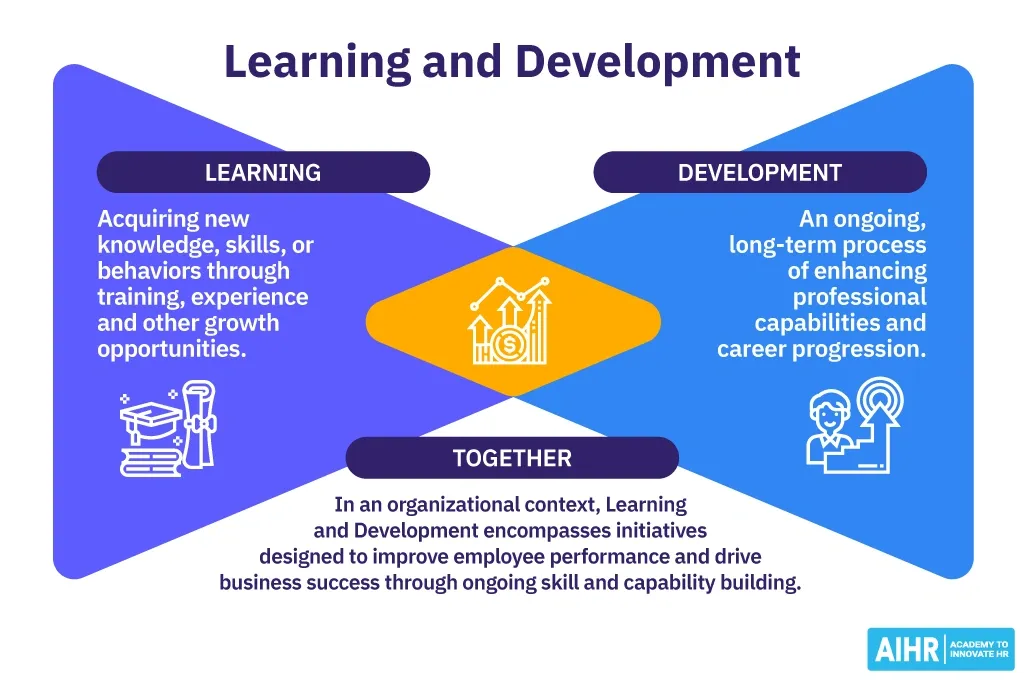
Image Source: AIHR
HR and L&D professionals are essential to successful executive mentorship programs. Their work changes mentoring from an informal practice into a strategic leadership development tool. Studies show that programs with active HR support are 40% more effective at developing leaders than those without structured guidance.
Identifying leadership gaps
HR teams must first diagnose leadership deficiencies within the organization. Research points to nine critical leadership competencies that future leaders often lack:
- Managing change
- Inspiring commitment
- Leading employees
- Taking initiative
- Building collaborative relationships
- Strategic perspective and planning
- Embracing participative management
- Quick learning ability
HR should run leadership assessments, conduct needs analyzes, and get input from current executives to identify these gaps. They can spot specific development areas for potential leaders by assessing performance data and tracking leadership bench strength. Learning what truly motivates employees is fundamental to addressing these leadership gaps.
Supporting mentors and mentees
After identifying gaps, HR must give full support to both sides of the mentoring relationship. This means creating training materials, setting clear expectations, and setting up feedback channels.
The first mentor-mentee meeting is the single biggest predictor of relationship success. HR needs to focus on this crucial initial connection. Mentors put in significant time and emotional effort, so HR must value this investment by training them on building trust, setting goals, and handling common challenges.
Using mentoring as a leadership tool
Mentoring becomes one of HR’s most powerful tools to build capability, boost engagement, and retain talent when positioned correctly. This approach needs mentoring to be part of broader talent management strategies.
Data proves mentoring works as a leadership tool. Mentees are five times more likely to receive promotions, while mentors are six times more likely to advance. Mentored employees stay with their organization 72% more often, making mentoring a powerful retention strategy.
HR should get leaders involved at all levels to maximize results. They need to include mentoring in succession planning and measure program success against set metrics.
Tracking Progress and Using Technology

Image Source: Domont Consulting
Mentorship programs become strategic assets when organizations track their results properly. Modern technology helps calculate and enhance leadership development through data-driven insights.
Key metrics to measure success
Success in mentoring needs both short-term indicators and long-term results. Here are the critical measurements to track:
- Promotion rates of mentees (mentees are five times more likely to receive promotions than non-mentees)
- Retention improvements (mentored employees show 50% lower turnover rates)
- Leadership competency score improvements
- Percentage of mentees achieving individual development goals
- Mentee-mentor satisfaction ratings (98% satisfaction with mentor matches in top programs)
These metrics should align with business objectives to show the tangible ROI of mentoring programs.
Leveraging mentoring platforms
Technology has changed the way organizations run their mentorship programs. Modern platforms provide:
- Automated mentor-mentee matching using sophisticated algorithms
- Built-in session agendas for productive conversations
- Progress tracking dashboards for mentoring relationships
- Calendar integration for scheduling without app-switching
- SAML & SSO support for enterprise security
These tools make large-scale initiatives work smoothly by reducing the administrative load that manual programs face.
Using feedback loops for improvement
A structured feedback system helps programs grow continuously. The most successful programs use:
- Regular pulse surveys measuring relationship quality
- Post-meeting prompts capturing immediate value
- Analytics connecting mentoring to business outcomes
- Longitudinal assessment 6-12 months post-program
Organizations maximize their program’s effectiveness through constant refinement rather than treating mentorship as a fixed process.
Conclusion
Leadership mentorship is the life-blood of successful organizations. It’s not just a nice-to-have program – we need it as part of our strategy.
The results of good mentorship programs speak for themselves. Companies see five times higher promotion rates among mentees and 50% lower turnover. Performance metrics improve by a lot too. These programs help tackle the worrying leadership burnout rates and build talent pipelines that organizations need to keep going.
You need to know the difference between coaching and mentoring. Mentors pass on wisdom through long-term relationships. Coaches focus on building specific skills. Both matter, but mentorship works better to turn promising employees into well-rounded executives.
Our blueprint gives you a clear path forward. Success comes from setting SMART goals, picking the right mentoring models, matching people well, and training everyone properly. On top of that, HR and L&D teams play a big part. They spot leadership gaps, support both sides, and weave mentorship into broader talent plans.
Modern tech lets us track mentorship effectiveness better than ever before. New platforms match people automatically, help schedule meetings, and collect data that links mentoring to business results. These tools turn mentorship from a gut feeling into something we can measure and use strategically.
Of course, building strong leaders through mentorship takes dedication and resources. But this investment pays off through better retention, stronger leadership skills, and improved company performance. Leaders who grow through good mentorship don’t just perform better – they create waves of positive change throughout the organization.
The facts are clear – companies that take structured mentorship seriously build stronger leaders and solve critical business problems. Your company’s future depends on the leadership pipeline you build now. Mentorship is the quickest way to build that pipeline while making your current leadership team even stronger.
Key Takeaways
These essential insights will help you implement a successful executive mentorship program that develops strong leaders and drives measurable business results.
• Mentorship drives retention and performance: Mentored employees are 5x more likely to get promoted and 50% less likely to leave, with organizations seeing $3,000 saved per mentee annually.
• Focus on long-term relationships over short-term coaching: Executive mentoring builds wisdom through sustained partnerships lasting 9+ months, while coaching addresses specific skills in shorter timeframes.
• Use structured blueprints for success: Set SMART goals, choose appropriate mentoring models, create strategic pairings, and provide comprehensive training to both mentors and mentees.
• Leverage technology to scale and measure impact: Modern mentoring platforms automate matching, track progress, and connect mentoring activities directly to business outcomes with measurable ROI.
• Align mentorship with business strategy: HR and L&D must identify leadership gaps, embed mentoring in succession planning, and treat it as a strategic leadership development tool rather than an isolated program.
When implemented correctly, executive mentorship transforms from a nice-to-have initiative into a powerful strategic asset that builds leadership pipelines, reduces turnover costs, and creates organizational resilience for long-term success.