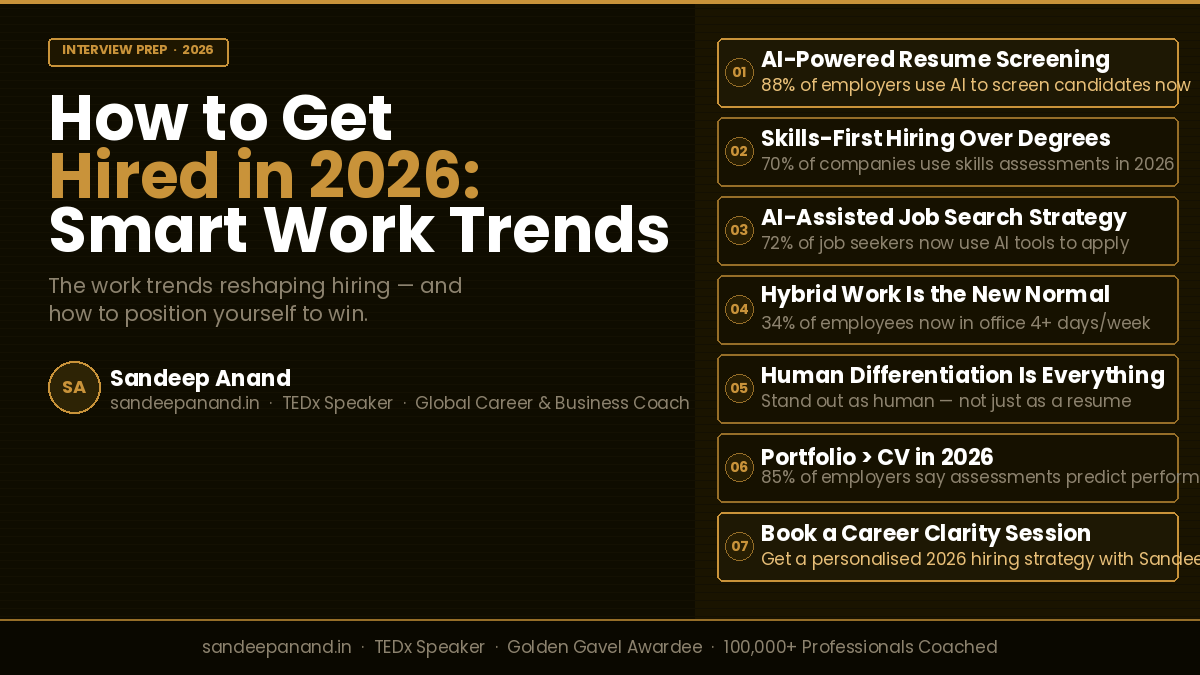
 AI usage in recruiting has doubled from 26% to 53% in just the last year. Work trends are evolving at an unprecedented pace.
The job search world is changing dramatically as we approach 2026. Recent statistics show 72% of job seekers now use some form of AI tool during their job search (up from 46% in 2019). The number of employees going to office four days a week has risen to 34% (from 23% in 2023). These changes paint a picture of work that’s radically different from what we’ve known before. Yes, it is clear that these future work trends not only change how companies hire but also reshape how candidates should present themselves.
The new reality shows 85% of employers use skills assessments, and 76% believe these tests predict job performance better than traditional resumes. The hr trends point to a 2026 hiring landscape that will be “less about ‘beating the bots’ and more about standing out as human”. Job seekers must adopt new strategies to adapt to this transformation in workforce development.
This piece will help you guide through these future workplace trends. You’ll learn everything from personalizing your job search with AI-driven platforms to becoming skilled at skills-based assessments. Let’s take a closer look at what you should know to get hired in 2026.
The Changing Job Market in 2026
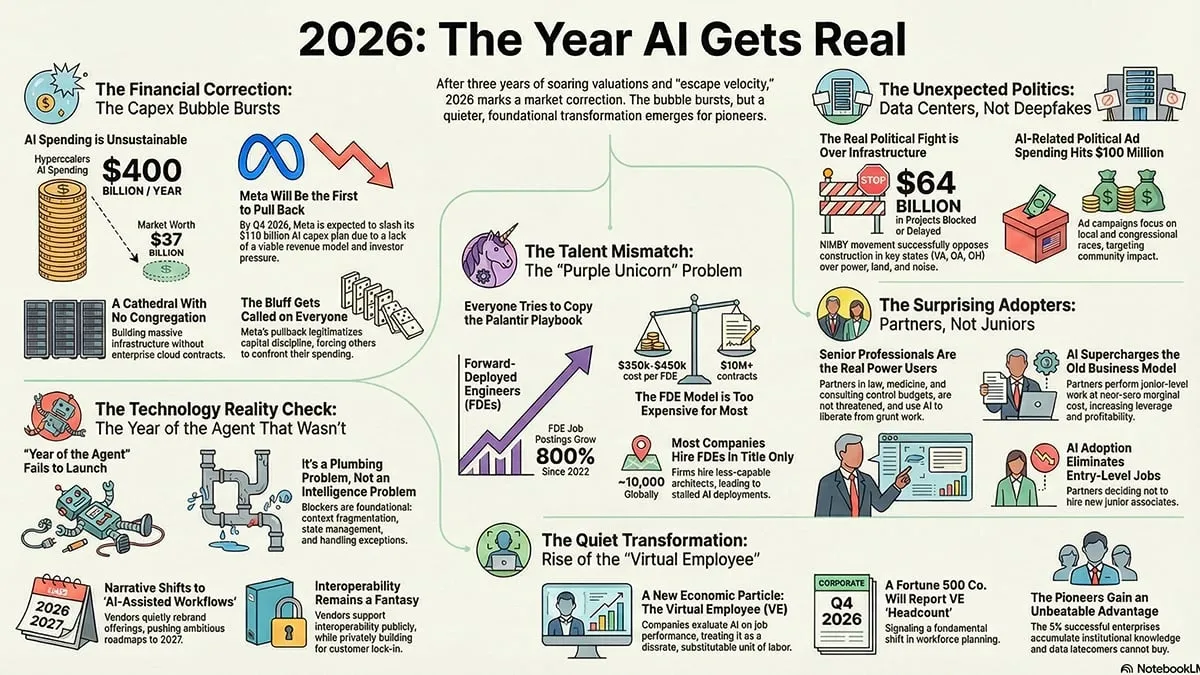
Image Source: Salesforce Devops by Vernon Keenan
The job market in 2026 looks quite different from what we’ve seen before. Companies now face two big challenges: rapid tech changes and shaky economic conditions. These factors have created a new hiring landscape.
Why 2026 is different from previous years
The way work gets done in 2026 has changed at its core. Companies experimented with AI throughout 2025. Now in 2026, AI has become vital to stay competitive.
Economic uncertainty continues to affect the job market. We still see issues with tariff policies, lower immigration numbers, and workers staying put. Companies now work in what experts call a “low-hire, low-fire” environment. They’re careful about hiring as job demands vary across industries.
New graduates feel this caution the most. Stanford University’s research shows a 16% drop in entry-level jobs where AI could replace human workers. This careful approach to hiring has created a gap between what employers want and what job seekers can offer.
How AI and automation are reshaping hiring
AI has evolved beyond a helper tool in 2026. It now works as a team member. AI systems handle complete workflow segments without human help. They manage up to 80% of basic recruitment tasks.
AI recruiting has become essential HR tech. About 88% of employers now use AI or automated recruiting to screen candidates. AI chatbots have changed how companies talk to candidates. They answer questions any time, suggest matching jobs, and guide people through the hiring process.
AI works best with high-volume hiring jobs. Retail, customer service, and logistics positions get huge numbers of applications for standard tasks. Modern AI systems can make decisions about what to do next and which candidates to pick. They solve problems 45% faster and are 60% more accurate than older tools.
The rise of skills-first hiring over degrees
Skills-based hiring keeps growing. NACE’s Job Outlook 2026 shows 70% of companies use this approach, up from 65% last year. About 71% use it for at least half their hiring decisions.
Companies use skills-based hiring at different stages:
- 87% during interviewing
- 65% during screening
- 81% when creating job descriptions
- 58% when creating interview rubrics
The change in screening methods stands out. Back in 2019, 73% of employers looked at GPA. Now only 42% do. About 73% of employers who skip GPA checks look at proven skills instead.
Some challenges still exist. WGU’s Workforce Decoded Report says 46% of employers plan to focus more on skills-based hiring in 2026. The biggest problem? About 53% struggle to verify skill claims. While 85% of companies say they use skills-based hiring, only 0.14% of new hires work in jobs that no longer require degrees.
8 Smart Work Trends You Need to Know
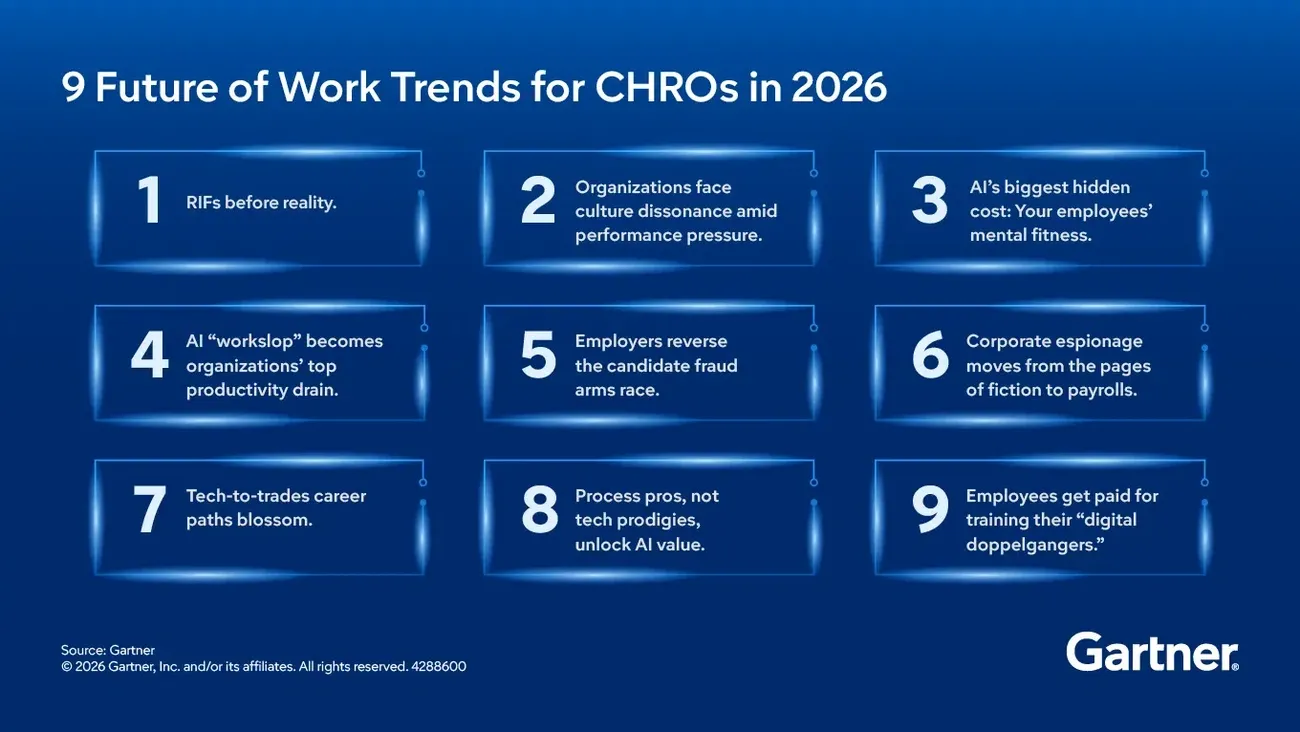
Image Source: Gartner
Job seekers must remain competitive as workplaces continue to evolve. These eight developments will revolutionize hiring processes in 2026. Candidates who adapt will find both challenges and opportunities.
1. AI-powered resume screening and job matching
AI resume screening has evolved beyond simple keyword matching into sophisticated evaluation systems. Machine learning algorithms make these tools better over time based on employer feedback. Modern screening tools work in three ways: they look for specific phrases, analyze how sentences convey meaning, and evaluate numerical data like work timelines. Companies of all sizes now use AI somewhere in their hiring process – about 87% of organizations.
2. Skills-based hiring replacing traditional resumes
Nearly two-thirds (64.8%) of employers now look at skills when hiring entry-level positions. They care more about what candidates can do than their education or work history. The importance of GPA has dropped significantly – from 75% of employers using it in 2019 to just 46% in 2025. Most companies now use skill-focused job descriptions (73%) and interview scoring systems (over 50%).
3. Remote and hybrid roles becoming standard
The business world has embraced hybrid work arrangements. Leadership positions lead this trend with 30% hybrid and 15% remote work options. Entry-level positions follow with 18% hybrid and 11% remote options. Without doubt, hybrid job postings have jumped from 15% in Q2 2023 to almost a quarter (24%) of new jobs in Q2 2025. Office-only roles dropped from 83% to 66% during this time.
4. Individual-specific experiences at scale
Companies now customize their recruitment processes for each applicant. They personalize messages and focus on unique skills while removing potential bias triggers like gender and age. Organizations study their candidate pool first and then create custom recruitment processes for specific roles or departments.
5. Human-centric skills gaining more value
Human skills have become more valuable as AI takes over routine tasks. The World Economic Forum’s Future of Jobs report shows that self-awareness and flexibility are now crucial. Companies don’t deal very well with evaluating these skills – 55% of U.S. employers say their biggest challenge is determining if candidates have the right soft skills.
6. Continuous feedback replacing annual reviews
Live, ongoing feedback has started replacing yearly performance reviews. Employees can fix problems quickly, feel more engaged, and work better in teams. This approach helps maintain focus on company goals while reducing anxiety about performance. Companies achieve this through feedback cultures, two-way communication, aligned goals, recognition systems, and coaching.
7. Ethical and transparent AI in hiring
AI recruitment faces increased scrutiny due to ethical concerns. The biggest problem involves algorithmic bias – AI systems can perpetuate discrimination when trained on biased historical data. Most adults (77%) don’t trust businesses with AI, though 57% say more transparency would help ease their concerns.
8. VR interviews and blockchain credentials
VR interviews create immersive environments where candidates show their skills through realistic simulations. At the same time, blockchain technology makes credential verification tamper-proof and easy to share. These technologies help companies learn more about candidates’ abilities while reducing fraud and making verification easier.
How to Adapt Your Job Search Strategy
Job seekers must adapt their strategy to land jobs in 2026. The numbers tell the story – 98% of Fortune 500 companies now use Applicant Tracking Systems (ATS). You need a modern approach to stay competitive in today’s job market.
Tailor your resume for AI systems
ATS software uses keywords and formatting algorithms to screen candidates before human review. Your resume needs an ATS-friendly template without headers, footers, graphics, images, or special symbols. The right file format matters too – stick to .docx since some systems can’t handle PDFs well.
AI scanners look for specific keywords. You should pick relevant terms from the job description and weave them naturally into your experience and skills sections. To name just one example, see how a job posting mentions “project management” – make sure this exact phrase shows up on your resume instead of just listing project roles.
Your resume needs these key elements:
- Simple, consistent formatting with standard section headers like “Experience,” “Education,” and “Skills”
- Readable sans-serif fonts such as Arial or Calibri
- Natural placement of job description keywords without stuffing
- Contact information in the document body, not in headers/footers
Use job search platforms with smart filters
Smart job seekers use AI-powered tools to multiply their opportunities. JobCopilot helps you send up to 50 customized applications daily and tweaks your resume for each role using multiple filters. LazyApply makes the process easier by automating applications across LinkedIn, Indeed, and Ziprecruiter with advanced AI algorithms.
Tools like JobScan compare your resume with targeted job descriptions. They give you a Match Score to show how well you fit the roles. The data shows that resumes matching exact job titles get 3.5 times more interviews.
Build a strong online presence and portfolio
Hiring managers expect to find you online. LinkedIn profiles matter – many recruiters check them early in their search. Your online profiles should match your resume perfectly. Any differences might make you look unfocused or unprofessional.
A digital portfolio can showcase your best work, even with limited experience. You can include academic projects, extracurricular activities, or personal creations that show off your skills. Keep your portfolio focused on targeted roles. Add value to your application without distracting hiring managers.
Upskilling for the Future Workplace
Upskilling has become the life-blood of career success in today’s faster-evolving job world. Research shows 39% of key skills will change by 2030. Professionals need the right capabilities to stay competitive in the 2026 job market.
Top in-demand skills for 2026
The 2026 job market values both technical expertise and human skills equally. Technical skills lead the way with AI and big data expected to grow 90% by 2030, alongside cybersecurity and cloud technologies. Human talents remain just as valuable, with 62% of hiring managers rating hard and soft skills equally important.
These skills deserve your focus:
- Technical domain: AI literacy, data analysis, cybersecurity, project management, and quality assurance
- Human capabilities: Communication (top soft skill for 2026), critical thinking, resilience, adaptability, and leadership
- Foundational abilities: Analytical thinking (70% of companies rate it essential), creative thinking, and systems thinking
Where to find relevant courses and certifications
Learning options are available everywhere since 54% of employees will need new skills to meet future demands. Google Career Certificates help professionals train in high-demand fields. Their program shows real results – 75% of graduates report positive career changes within six months. Coursera’s specialized courses from industry leaders help build both technical and workplace skills.
Learning paths include free massive open online courses (MOOCs), trade schools for hands-on training, and bootcamps for quick skill development. Many programs offer verified credentials that showcase your expertise to employers.
How to line up learning with future of work trends
The best upskilling strategy focuses on skills that work alongside technology rather than compete with it. AI will change nearly 40% of global jobs. Smart professionals focus on abilities that machines cannot copy.
Your upskilling approach should treat skills like investments. Learn to use AI tools for better decisions. Build human abilities that machines can’t match. Look for new experiences through projects or certifications. The effort pays off – jobs requiring new skills offer roughly 3% higher pay in the US and UK.
Tools and Platforms That Can Help You Get Hired
Image Source: Text Blaze
Success in the 2026 job market depends on making use of the right digital tools and platforms. The right options that match your career goals can speed up your job search by a lot.
AI job search tools like JobSeer and Pymetrics
AI-powered job search technologies have revolutionized the way candidates find and apply for positions. Pymetrics uses neuroscience-based games to assess candidates’ cognitive and emotional traits. It focuses on soft skills instead of traditional resume screening. Users love this approach and report positive experiences with work-life balance and company culture.
Other AI tools you should check out:
- Sonara matches your capabilities to jobs in just three steps
- AutoJob helps you find and apply to relevant careers automatically
- Scale.jobs has an impressive 93% placement rate within three months
Best job search apps: LinkedIn, Indeed, Glassdoor
LinkedIn remains a must-have for job seekers, with millions of daily job postings. Smart features like job alerts based on your priorities and specific companies make it even better. LinkedIn Premium lets you access AI-powered job assessments to check your fit and position yourself better.
Indeed leads as the world’s largest job board, with over 700 million members and 50 million companies across 200 countries. Glassdoor adds value through employee reviews. These reviews help you research potential employers before you apply.
Career platforms offering skill assessments
Skill assessment platforms are vital parts of modern job hunting. Almost 99% of Fortune 500 companies use these tools to recruit. TestGorilla offers multiple tests including coding skills assessment and catches potential cheating. HackerRank and Codility focus on testing coding knowledge for technical roles.
Sova gives you a full picture with tools that cover cognitive ability, personality questionnaires, motivation assessments, and skills evaluation across 38 soft skills.
Conclusion
The 2026 job market brings new challenges and opens doors for well-prepared candidates. AI has revolutionized recruitment, with 87% of organizations using AI tools in their hiring process. Skills-based assessments have taken over traditional degree requirements. Job seekers now need to prove their practical abilities instead of just showing credentials.
Smart work trends require new approaches to job hunting. Candidates need to prepare their resumes for AI screening and use specialized job platforms. A strong digital portfolio and continuous skill development have become essential. Your strategy should highlight abilities that work alongside automation rather than competing with it.
This new digital world favors those who welcome technology while showcasing their human strengths. Companies still value critical thinking, communication skills, and adaptability – qualities that AI can’t match. Your preparation needs to strike a balance between technical knowledge and these core human traits.
Success comes to those who can handle both digital tools and human connections well. Understanding these work trends, adjusting your approach, and building relevant skills will make you stand out as an ideal candidate. The real goal goes beyond getting past AI systems – it’s about showing lasting value that makes you essential in tomorrow’s workforce.

![17 High-Income Skills That Pay $100K+ in 2026 [Expert List]](https://www.sandeepanand.in/wp-content/uploads/2026/03/preview_34_17-high-income-skills-300x169.png)