How to Build a Winning Company Growth Strategy: A CEO’s Step-by-Step Guide
 AI will add an astounding $15.7 trillion to the global economy by 2030.
This massive potential remains largely untapped as only 10% of organizations have a complete AI strategy. CEOs face both challenges and chances in today’s competitive landscape. Companies that propel development during economic downturns maintain their advantage over competitors. These businesses deliver higher-than-average shareholder returns for years afterward.
Business leaders need a resilient growth strategy now more than ever. The global AI market should reach $826.70 billion by 2030. Smart leaders are making AI strategy central to their operations. Companies that effectively use AI can boost operational efficiency by up to 40%. Yet most businesses haven’t realized this potential.
A troubling statistic shows that all but one of these Fortune 100-size companies have hit at least one growth stall in their history. This piece will help you build a corporate growth strategy that withstands market changes and uses emerging technologies to achieve lasting success.
Our step-by-step approach will show you how to create, apply, and extend a growth strategy. Your business will be ready for long-term success in an AI-powered future.
Define Your Growth Vision and Objectives
“The most important thing is to be able to think big, dream big and know how to translate these dreams into reality.” — Jack Ma, Founder of Alibaba
A powerful growth strategy starts with a clear direction. You must define what growth means for your business and set objectives that match your long-term dreams before jumping into tactics.
Clarify what growth means for your company
Growth never happens by accident or careful planning. CEOs achieve success when they rally their organizations around bold, clear targets. Setting ambitious goals might feel scary, but aiming for 10% growth becomes impossible if you aim lower.
Your company’s growth vision should paint a picture of where you want to be in 3-10 years. This vision guides decisions and inspires stakeholders. A strong vision statement shows your business’s purpose and describes long-term goals that motivate your team to contribute meaningfully.
Microsoft’s early vision serves as a perfect example: “a computer on every desk and in every home”. This simple yet powerful statement shaped decades of strategic decisions. Your vision should focus on the fundamental change your company wants to create.
Your growth vision needs to:
-
Target ambitious yet reachable outcomes
-
Match your industry and market position
-
Spark inspiration and guide strategy
Set SMART goals aligned with long-term vision
SMART goals create the roadmap while your vision shows the destination. This framework makes sure your objectives are Specific, Measurable, Achievable, Relevant, and Time-bound.
Specific goals eliminate confusion by answering who, what, why, when, where, and how. Rather than just “growing the business,” spell out what growth means—whether that’s reaching new markets, building better client relationships, or embracing new technologies.
Numbers turn abstract goals into trackable progress. Add specific figures, costs, and measures that show when you’ve hit your targets. “Increase eco-friendly projects by 30% within 5 years” beats a vague goal like “becoming more sustainable”.
Reality matters—unrealistic goals hurt team morale, reduce productivity, and drive people away. Mix ambition with practicality by looking at what you can do with your current resources.
Each goal should push your vision forward and add real value to your company’s future. Deadlines create urgency and accountability that keep progress steady.
Identify key performance indicators (KPIs)
KPIs help you learn about your company’s financial and operational health. Managers use them to check business performance and track progress toward strategic goals. Pick KPIs that matter most to your specific business for the best results.
Great KPIs share three traits: they match key objectives, provide actionable data for immediate decisions, and help spot potential issues early. Skip vanity metrics like social media followers. Focus instead on business drivers like customer acquisition cost or revenue per employee.
Mix predictive indicators with trend-confirming ones. Experts suggest using 60% predictive and 40% confirming indicators to enable both forecasting and validation.
Your best bet is to automate KPI tracking by connecting accounting and ERP systems. This keeps metrics current and calculations consistent, letting teams analyze rather than collect data.
Build a Data-Driven Foundation
A strong data foundation supports every successful company’s growth strategy. Research shows organizations waste 71% of their data potential because their systems and sources remain disconnected. You can turn raw information into useful insights that shape strategic business decisions by building solid data infrastructure.
Audit your current data infrastructure
A full data audit helps you separate valuable information from noise. This process looks at your data to confirm its accuracy, consistency, and security. Start by:
-
Identifying all relevant data sources (internal and external)
-
Mapping how data flows throughout your organization
-
Evaluating current data quality and security measures
-
Assessing compliance with regulatory requirements
Data auditing benefits go beyond organization. Companies doing regular data audits make decisions 2.5x faster and are 60% more likely to exceed revenue goals. This process also helps spot inefficiencies, prevent security breaches, and keep customer trust.
Use predictive analytics for market insights
Predictive analytics uses statistical models and machine learning to forecast financial outcomes, including revenues, costs, risks, and market trends. Finance departments can estimate future scenarios with better precision and update projections as new data arrives.
Companies adopt predictive analytics faster now. About 22% already use it while 62% plan to implement it soon. Businesses using these techniques say predictive recommendations influenced 26.34% of total orders. This number jumped to 34.71% after three years of use.
Most companies start by looking at their internal historical data. They gradually add external sources like macroeconomic indicators. Perfect data isn’t necessary—proper ownership and continuous improvement matter more for success.
Ensure data governance and quality standards
Data governance sets rules, roles, and responsibilities to manage organizational information throughout its lifecycle. Poor data quality costs the U.S. economy over $3 trillion each year when companies lack proper governance.
Good governance needs several connected components:
-
Data quality management: The 1-10-100 rule shows fixing data at entry costs $1, while fixing at decision-making costs $100. You should implement automated validation and regular profiling
-
Clear ownership structures: Someone must be responsible for data quality, measurement methods, and maintenance processes
-
Regular monitoring: Set up automated dashboards for up-to-the-minute metrics and do quarterly audits
Companies with good governance frameworks spend less, follow regulations better, grow faster, and work more efficiently. Data quality remains the main concern for over 70% of firms, showing how important this foundation is.
These three pillars—auditing, predictive analytics, and governance—create the solid data foundation you need for any successful growth strategy in today’s digital world.
Leverage AI to Accelerate Strategic Growth
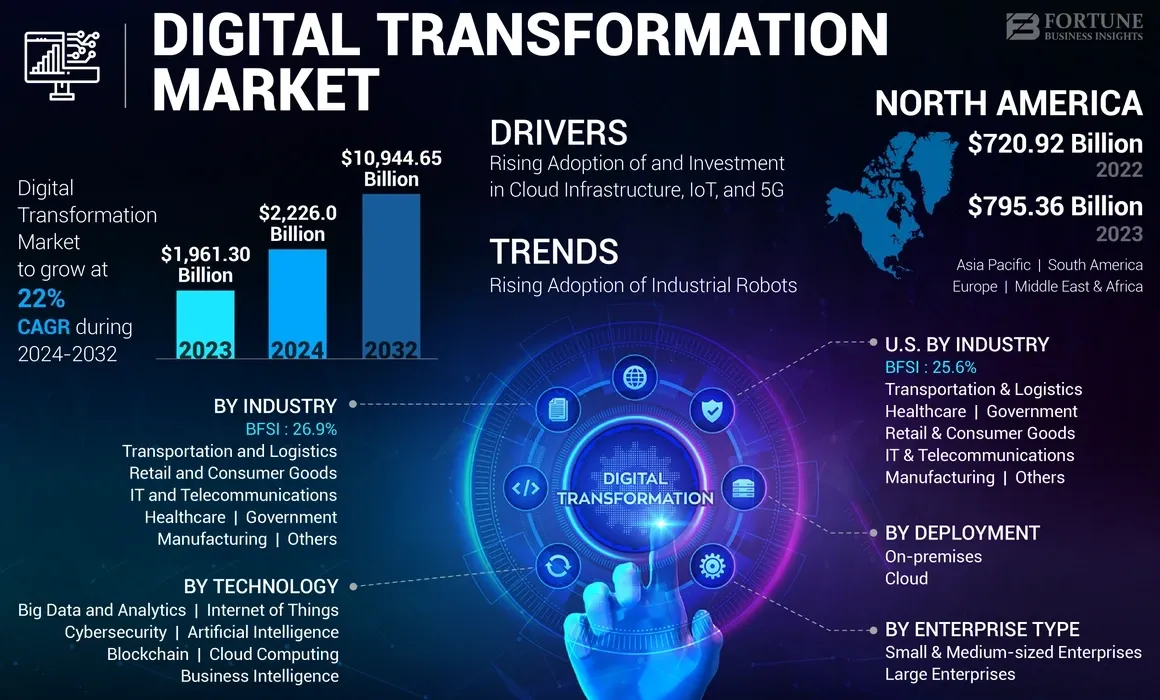
Image Source: Fortune Business Insights
Artificial intelligence has emerged as a game-changing element for CEOs who want to stimulate their company’s growth strategy. Three-quarters of executives recognize AI’s immense importance. Yet only 20% feel confident about their organization’s proficient usage of this technology.
Automate repetitive tasks to improve efficiency
AI automation revolutionizes business operations by handling routine tasks that once took up valuable time. Teams report increased productivity after implementing automation solutions, and this allows them to focus on strategic initiatives instead of mundane responsibilities. A professional services firm saved nearly 10 hours weekly across their team through phased AI automation implementation. Their client deliverables improved significantly too.
Use AI for customer personalization and engagement
Customer expectations have changed dramatically. Research shows 71% of consumers now expect tailored experiences. Companies that fail to deliver these personalized interactions risk frustrating 67% of their customers. Personalization delivers tangible business results—companies that grow rapidly generate 40% more revenue through personalization than their competitors.
A real-life example shows the power of this approach. One company utilized AI-powered decisioning engines to prioritize specific customer segments and adjust compensation. Their strategic approach resulted in an 800% increase in customer satisfaction. High-value customers showed 59% less intention to leave.
Apply machine learning for smarter decision-making
Machine learning algorithms help leaders make informed strategic decisions by analyzing big datasets to identify patterns and predict outcomes. PwC research reveals that 54% of executives report improved organizational productivity from AI. Note that ML applications typically fit into three categories:
-
Predictive analytics for forecasting trends and behaviors
-
Automation of repetitive processes
-
Optimization of business operations and resource allocation
Integrate AI into existing business systems
AI implementation success depends heavily on its integration with current infrastructure. Organizations need to combine information from different systems into a single source of truth. This process needs specialized skills in machine learning and data science. Modern platforms now offer low-code solutions that help business teams deploy automation quickly.
Legacy systems that can’t handle immediate predictions can still work with ML outputs. Lightweight APIs or middleware serve as effective bridges between modern and traditional infrastructure.
Empower Leadership and Teams for Change
Your company’s growth strategy depends heavily on its people. Success comes from the core team working together and giving employees the tools they need. Even the best AI systems will fail without these basic elements in place.
Getting leadership to line up with the growth strategy
The original strategy needs buy-in from senior leaders. Companies that achieve this execute their plans faster and more effectively—giving them an edge in today’s fast-changing markets. Leadership teams need to agree on:
-
Where the business is heading (long-term ambition)
-
How it will get there (chosen strategy)
-
What capabilities are required
-
What activities should stop (to avoid diluting results)
Studies show leaders who display at least three of the five growth mindsets are 2.4 times more likely to outperform their competitors profitably. These growth-focused leaders naturally shape their decisions for both immediate and future goals. They respond quickly to changes while building a resilient organization.
Building a culture that welcomes new ideas
Beyond leadership alignment, organizations become agile through a culture that rewards trying new things. While many agile companies avoid strict hierarchies, the change starts at the top. Good agile leaders create spaces where:
-
Teams get rewarded for being flexible, working together, and solving problems creatively
-
People feel confident taking calculated risks
-
Mistakes become learning opportunities
Psychological safety is the life-blood of an innovative culture. Companies see 3.5 times more innovation when employees can share ideas without fear [52, 53].
Training people for AI adoption
AI adoption faces one big hurdle: lack of skills. While 93% of organizations plan to invest more in AI over the next two years, only 49% of HR officers make AI and data analysis training a priority. This gap puts successful implementation at risk.
Training should give everyone—not just technical staff—an understanding of AI. Harvard Business School Professor Iavor Bojinov explains: “Technical understanding isn’t just for engineers; it’s a critical part of using AI well”. CEOs must champion AI and promote upskilling to make adoption a clear priority.
Strong leadership alignment, an innovative culture, and proper AI training create the foundation for real growth in your organization.
Measure, Optimize, and Scale
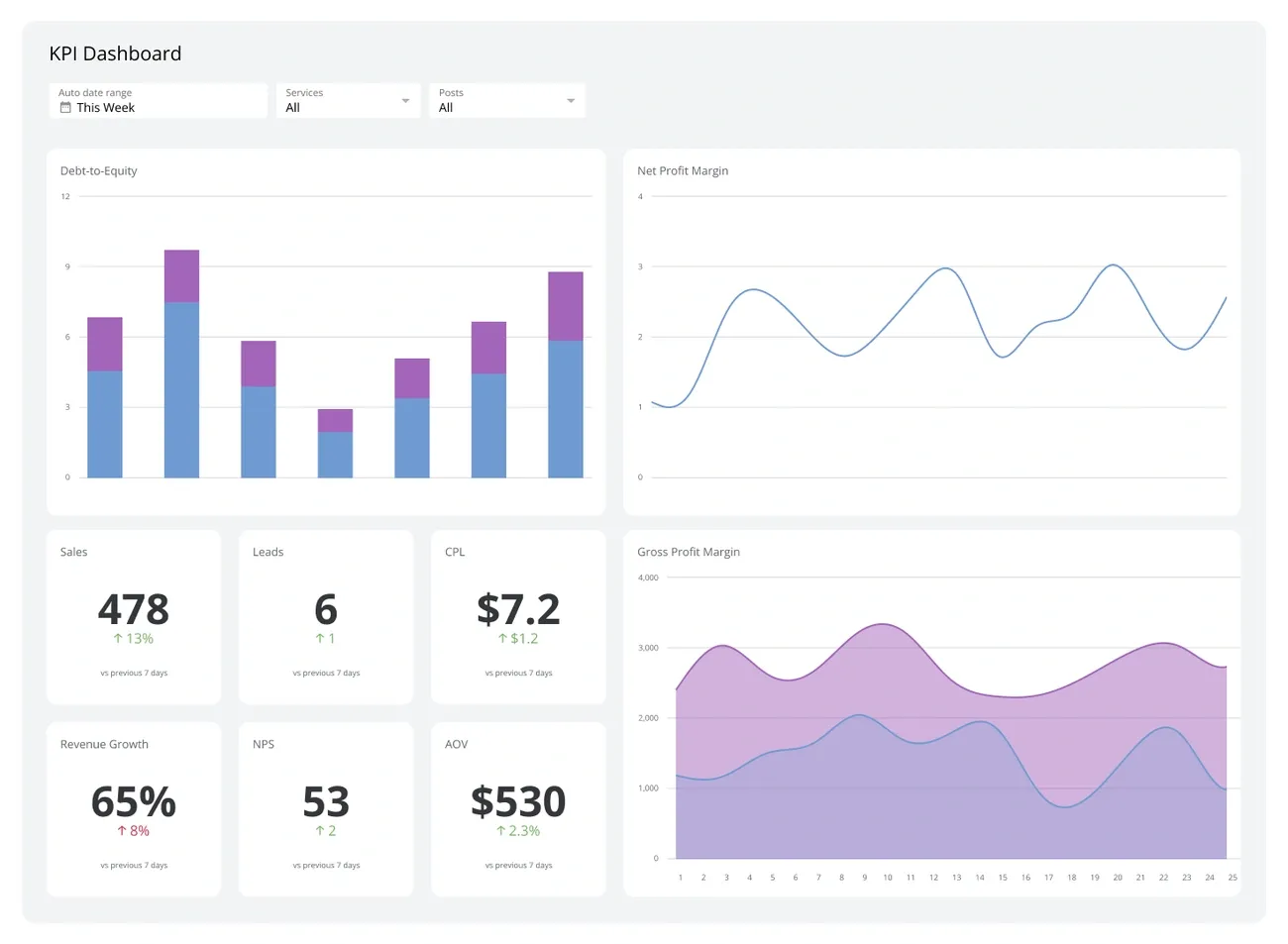
Image Source: Klipfolio
“You have to be very nimble and very open-minded. Your success is going to be very dependent on how you adapt.” — Jeremy Stoppelman, CEO of Yelp
Measuring results will give a solid foundation to grow your company successfully. Your innovative plans might not reach their full potential without proper tracking and optimization.
Track ROI and performance metrics
CEOs can make informed decisions about resources by measuring return on investment. Companies learn about areas they need to improve when they check their financial performance regularly. This helps them boost profits and optimize their strategic plans. Revenue growth, gross profit margin, and cash flow are vital metrics to watch. These numbers show your company’s financial health and progress up-to-the-minute.
Companies that use performance metrics make decisions 2.5x faster and are 60% more likely to exceed their revenue goals. Measurable KPIs tell the story of your business performance and line up with your overall goals across departments.
Use feedback loops to refine strategy
Customer feedback becomes applicable information through a continuous cycle of collect, learn, adapt. Your growth strategy stays in tune with market needs instead of relying on outdated assumptions or guesswork.
Studies show that 85% of companies using feedback loops see better customer satisfaction. The process should gather input from multiple channels. Teams can analyze patterns, create action plans, and make changes quickly. Each strategic move gets more feedback and thus encourages more improvements.
Scale successful initiatives across departments
The next step is to expand your winning strategies throughout your organization. Testing these initiatives on a smaller scale helps reduce risk. You can refine them based on actual results before wider implementation.
Clear communication about goals and progress to all stakeholders makes scaling work. Organizations that maintain consistent execution set themselves up to win long-term. Strategic growth isn’t about doing more—it’s about doing the right things with precision and purpose.
Conclusion
A winning company growth strategy needs careful planning and execution in multiple areas. CEOs must combine big-picture thinking with data-driven decisions to achieve lasting success. A clear vision and SMART goals provide direction and purpose to your organization.
Your strategic decisions should be based on solid data. Companies gain major competitive advantages when they audit their infrastructure, use predictive analytics, and maintain strong governance standards. On top of that, those who properly control this data foundation can tap into AI’s full potential.
AI adoption offers maybe the most important chance for business growth today. Forward-thinking companies outpace their traditional competitors through automated repetitive tasks, individual-specific experiences, and improved decision-making. All the same, technology alone can’t drive change.
People remain vital to any growth initiative. Leaders who line up with the vision create the right conditions for success, while teams with innovative and agile culture adapt quickly to market changes. Of course, companies that train their workforce in AI see better returns on their technology investments.
Measurement helps refine strategy. Companies can spot what works, drop what doesn’t, and keep improving their growth by tracking ROI and performance metrics. Successful growth strategies evolve through iteration rather than staying fixed.
Note that lasting success comes from balance. Your company will thrive in this competitive business world when you pair ambitious goals with careful execution, match innovative technology with human expertise, and balance bold innovation with disciplined measurement.